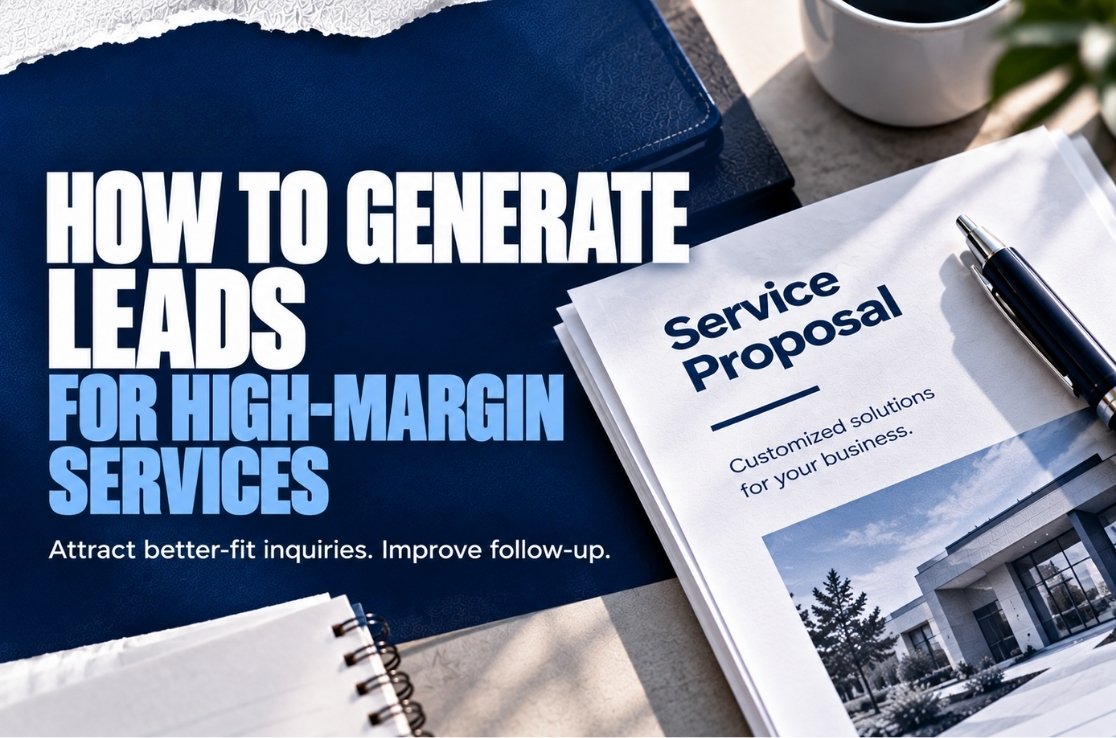
Getting inquiries isn’t the same as attracting profitable work.
Your marketing may be bringing in prospects who want discounts, smaller packages, or services that take too much time to deliver. Meanwhile, the offers you actually want to sell aren’t getting enough attention.
The goal isn’t simply more leads. It’s attracting buyers whose needs, budgets, and expectations match your most profitable services.
Ready to Review Your Lead Generation?
Take VM Inbound’s Lead Generation Growth Scorecard.
Here’s how to make that happen.
1. Choose One Service to Prioritize
Don’t ask your marketing to promote everything at once. Start with a service that delivers a healthy margin without excessive customization or support.
Review recent projects. Which stayed within scope? Which were straightforward to deliver? Which clients understood the value?
Then write one clear statement:
“We help [specific buyer] solve [specific problem] through [service].”
For example: “We help consulting firms organize sales follow-up through CRM implementation.”
Use that focus to guide your content, landing page, and outreach.
2. Define What Makes a Lead Qualified
A qualified lead needs more than an interest in your service. They also need to fit the way you work.
Create a short checklist covering:
- The problem your service solves.
- A budget that fits your offer.
- A realistic timeline and buying process.
Use these criteria in your inquiry form and discovery calls. Ask questions that reveal context, such as, “What’s prompting you to address this now?”
The aim is fit, not collecting as many inquiries as possible.
3. Make Your Service Page Specific
Your landing page should quickly answer three questions: Who is this for? What problem does it address? What happens next?
Replace vague statements like “We help businesses grow” with a situation your buyer recognizes.
For example: “Your inquiries are coming in, but follow-up is scattered across inboxes and spreadsheets.”
Explain what your service includes, add relevant proof, and give visitors one clear next step. Avoid making several competing offers on the same page.
4. Answer Questions Buyers Ask Before Purchasing
Create content that helps prospects evaluate your service, not just discover your business.
Start with questions from sales calls and client emails. Useful topics include:
- What affects the cost?
- When is this service worth investing in?
- How does it compare with the alternatives?
Connect each article to the relevant service page. Someone reading about CRM implementation costs should land on your CRM offer, not a general homepage.
5. Qualify, Follow Up, and Review Results
Separate prospects who fit your service from those who are simply interested. Fit and engagement are different signals, and both can help you prioritize follow-up.
Respond personally to strong-fit inquiries, confirm scope before quoting, and record the next action for each opportunity.
Then track which leads become profitable projects, not just how many forms get submitted. If a campaign produces work that repeatedly exceeds scope, revisit your targeting, pricing, or offer boundaries.
Before adding more marketing activity, review where your current process needs attention.
Take the Next Step
Review your approach with VM Inbound’s Lead Generation Growth Scorecard.
Your Next Step: The Lead Generation Growth Scorecard
Focus your lead generation on the services you want to sell.