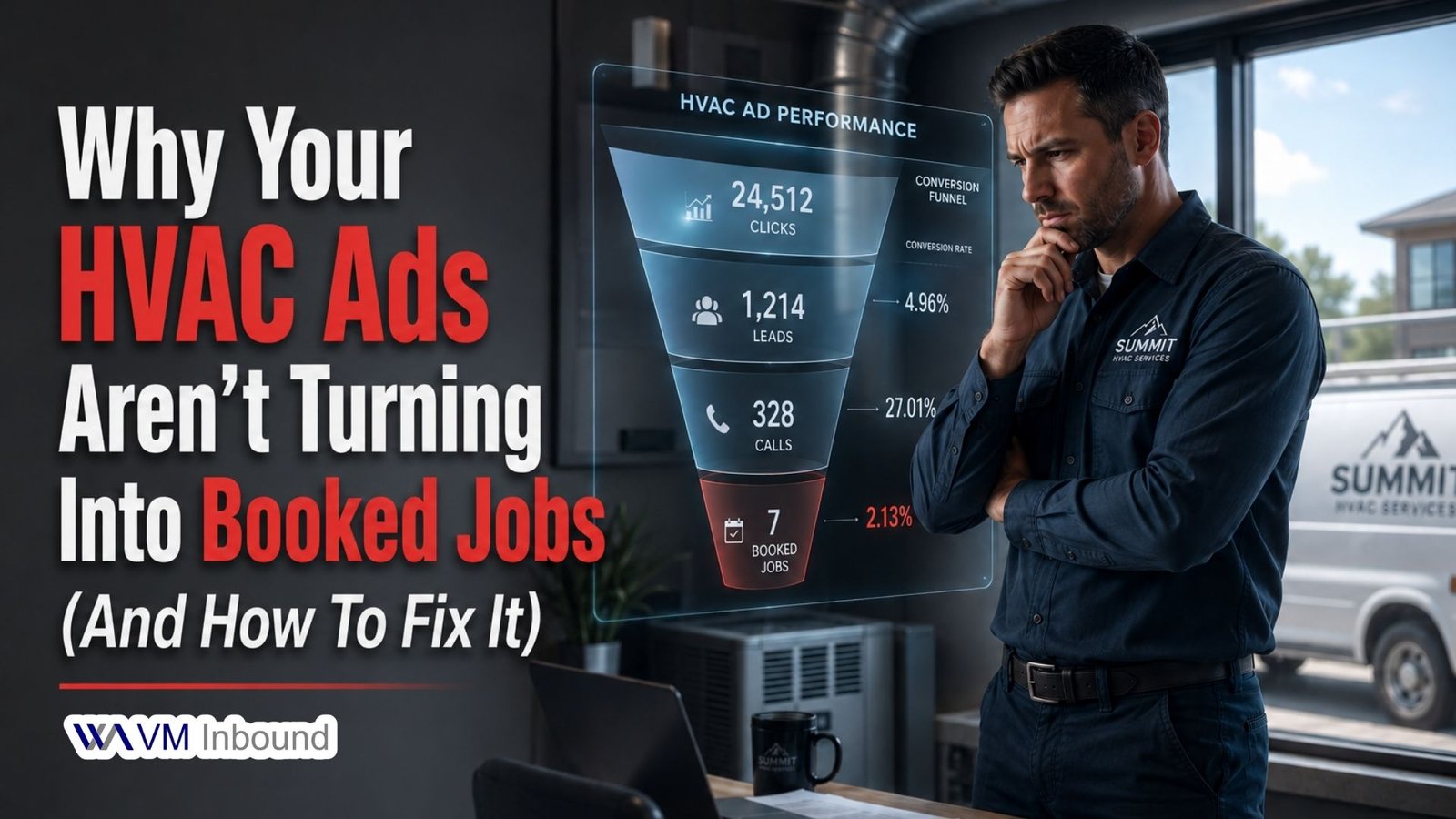
Paying for ads but not seeing booked jobs is one of the most frustrating situations for HVAC business owners. You are spending money, getting clicks, and watching traffic come in, but your phone is not ringing the way it should. It feels like something is broken, and the instinct is to increase the budget. In reality, the issue is rarely the traffic itself. More often, the breakdown happens after the click.
Turn More HVAC Clicks Into Booked Jobs
Why HVAC Ads Feel Like a Waste
Many HVAC companies assume low bookings mean low visibility. So they spend more on Google Ads or social campaigns, hoping volume will fix the problem. But if your funnel is not built to convert, more traffic simply amplifies inefficiency. You are paying for attention without capturing intent.
The truth is simple: clicks do not equal customers. What matters is what happens between the moment someone clicks your ad and the moment they decide to call or book.
The Three Places Ad Spend Gets Wasted
If your HVAC ads are not converting, the issue usually falls into one (or more) of these three areas.
1. Generic Landing Pages
Sending paid traffic to a homepage or a cluttered service page is one of the most common mistakes. These pages are often designed to inform, not convert.
Problems with generic pages:
- Too many options create decision fatigue.
- Weak or unclear headlines that do not match the ad.
- No urgency or compelling reason to act now.
- Poor mobile experience.
A homeowner clicking on “24/7 Emergency AC Repair” expects to land on a page that reinforces that exact message immediately. If they have to scroll, search, or guess, they leave.
2. Missing Call and Form Tracking
If you are not tracking calls and form submissions properly, you are operating blind.
Common issues include:
- No call tracking numbers to attribute leads to specific campaigns.
- Forms that submit but are not monitored or integrated into a CRM.
- No visibility into which ads actually drive revenue.
Without tracking, you cannot tell what is working. This leads to wasted spend on underperforming campaigns and missed opportunities to double down on what converts.
3. Slow Lead Response
Speed is one of the biggest conversion factors in HVAC marketing. When someone reaches out, they usually need service now, not later.
What slow follow-up looks like:
- Calls that go unanswered.
- Form submissions that sit for hours or days.
- No automated confirmation or next-step communication.
The reality is that the first company to respond often wins the job. Even a delay of 10–15 minutes can reduce your chances of booking significantly, especially in competitive markets.
What a High-Converting HVAC Funnel Looks Like
Fixing conversion issues does not require reinventing your entire marketing strategy. It requires tightening the path from click to customer.
Ad-to-Page Message Match
Your ad and landing page must feel like a seamless continuation.
- Use the same headline language from the ad.
- Reinforce the exact service (e.g., “Emergency AC Repair in Quezon City”).
- Align visuals and offers with the promise in the ad.
This builds immediate trust and reduces bounce rate.
One Clear Call-to-Action
Every high-performing page focuses on one primary action.
- “Call Now for Immediate Service”
- “Book Your HVAC Repair Today”
Avoid multiple competing buttons or vague CTAs like “Learn More.” Make it obvious what the next step is, and make it easy.
Trust Signals and Local Proof
Homeowners want reassurance before they contact you.
Effective trust elements include:
- Google reviews and ratings.
- Before-and-after photos or job snapshots.
- Certifications and licenses.
- Local service area mentions.
The more specific and local your proof is, the stronger your credibility.
Why Speed to Lead Matters
Speed is not just a sales tactic; it is a competitive advantage.
When a lead comes in, they are likely reaching out to multiple providers. The business that responds first, communicates clearly, and sets expectations usually gets the job.
Ways to improve speed:
- Enable call forwarding and ensure someone always answers.
- Use automated SMS or email confirmations for form submissions.
- Set internal response time targets (e.g., under 5 minutes).
Faster follow-up does not just increase bookings; it maximizes the value of every click you already paid for.
A Quick Self-Audit for HVAC Owners
If you are unsure where your funnel stands, start with this quick check:
- Are your ads sending traffic to a dedicated, service-specific landing page?
- Does your landing page clearly match your ad message?
- Is there one strong, visible CTA?
- Can you track every call and form submission back to a campaign?
- How fast do you respond to new leads?
If you answered “no” or “not sure” to any of these, there is likely a conversion gap costing you jobs.
Take the Next Step
If your HVAC ads are not converting, the solution is not always more traffic; it is a better funnel. Fixing your landing pages, tracking, and follow-up process can dramatically improve results without increasing your ad spend.
If you are ready to turn more clicks into booked jobs, start by optimizing your HVAC repair landing page and tightening your lead handling process. Small changes here can produce immediate gains in calls, bookings, and revenue.