Every HVAC owner knows the cycle.
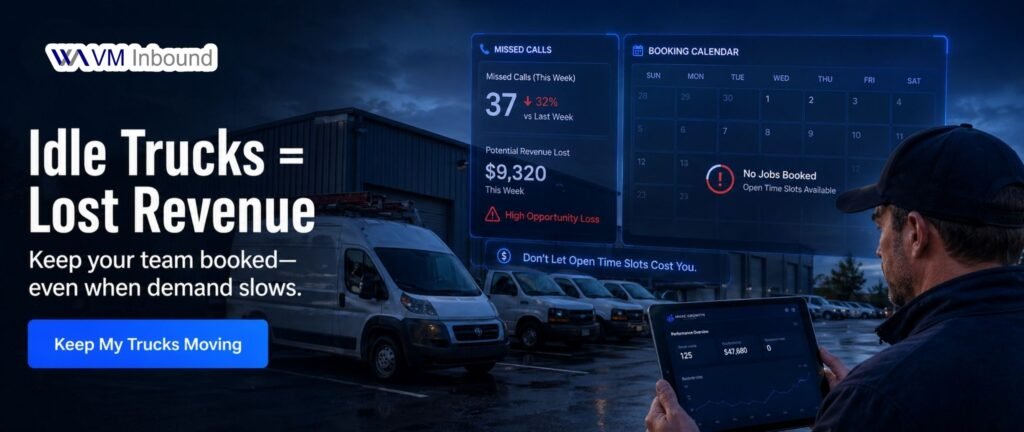
You’re slammed for a few months, turning work away then suddenly the phones go quiet, trucks sit idle, and cash flow tightens.
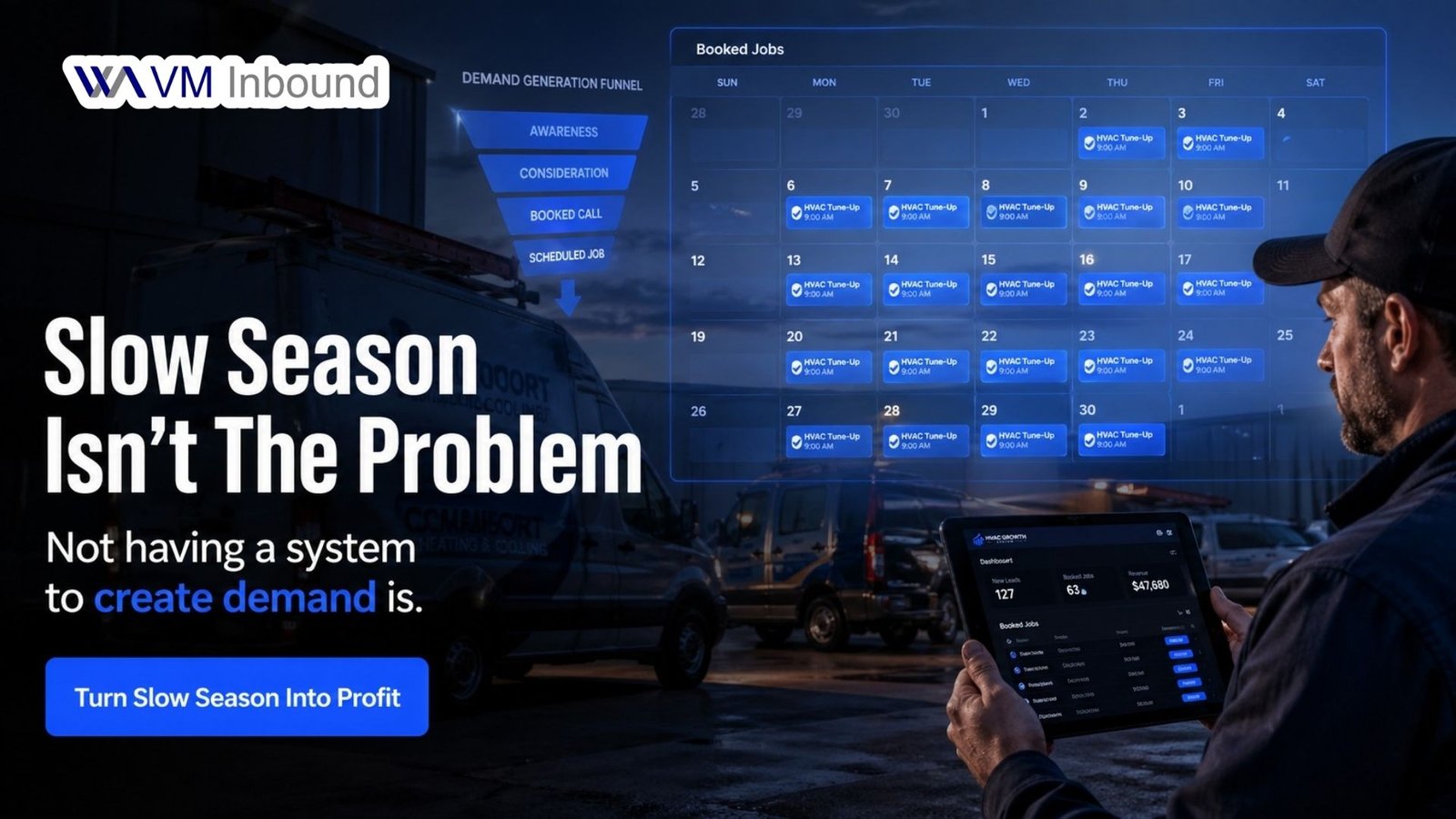
The problem isn’t just seasonality, it’s relying on demand instead of shaping it.
The companies that stay profitable year round don’t just react to busy seasons. They create opportunities during the slow ones.
Understanding Seasonal Demand Patterns
HVAC demand is predictable, even if it feels chaotic.
Cooling spikes when temperatures climb. Heating surges when they drop. But by the time customers are calling in waves, it’s already too late to “prepare.”
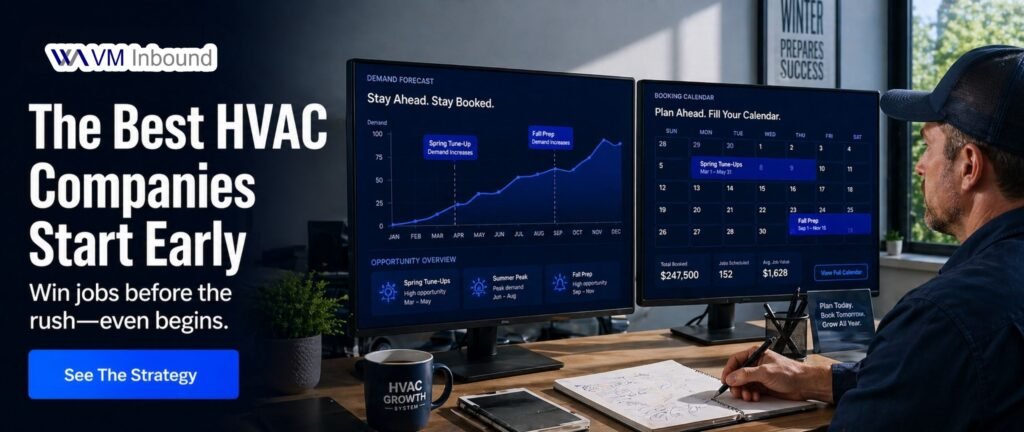
The smartest companies start their outreach 2–3 months before peak season hits.
Why? Because that’s when homeowners are still in planning mode, not panic mode.
In spring, they’re open to AC tune-ups and upgrades. In fall, they’re thinking about heating systems before the first cold snap.
If you wait until demand peaks, you’re competing with everyone else. If you start earlier, you capture the easier, less price-sensitive jobs.
What To Focus On During Slow Months
Slow months don’t mean no demand, they just require a different offer.
This is the time to push maintenance plans and tune-ups. These are easier “yes” decisions for homeowners and keep your techs working without long sales cycles.
Indoor air quality (IAQ) is another overlooked opportunity. Air purifiers, humidifiers, and filtration upgrades solve real problems and aren’t tied to extreme weather.
You should also be building your review base during this time. Every completed job is a chance to strengthen your online presence before peak season hits.
When demand spikes again, those reviews become one of your biggest conversion tools.
Marketing Plays That Work In Shoulder Seasons
Your marketing strategy should shift with the season, not disappear.
Email campaigns to past customers are one of the highest ROI moves you can make. These people already trust you, they just need a reason to act now. A simple “pre-season tune-up” reminder can generate immediate work.
Your Google Business Profile should also stay active. Posting updates, adding photos, and collecting reviews helps you stay visible when search demand is lower, and dominate when it rises.
And during slower months, your offers should feel low commitment. A homeowner might delay a full system replacement, but they’ll say yes to a checkup or diagnostic.
Lower the barrier, and you’ll increase volume.
How a Repair-First Funnel Keeps Trucks Moving
If your goal is consistency, repairs should be the foundation of your marketing.
Repair calls are high intent. The homeowner already has a problem and wants it solved now.
That makes them the fastest path to booked jobs, especially during slower periods.
But the real advantage comes after the repair.
A well-handled service call creates trust. And that trust opens the door to larger opportunities like system replacements or long-term service plans.
In other words: today’s repair job can become tomorrow’s high-ticket sale.
A “repair-first” funnel keeps your team busy now while building future revenue at the same time.
Turn Slow Season Into a Competitive Advantage
Most HVAC companies slow down because they’re waiting for demand to return.
The better approach is to generate your own demand, earlier, smarter, and more consistently.
When you do that, the slow season stops being a problem and starts becoming an opportunity.
If you want a predictable way to keep your board full year round, it starts with the right system.
Our HVAC repair funnel is designed to help you capture more high intent jobs in any season, so your trucks stay moving and your revenue stays steady.